When the illustrator Robert Fawcett decided to abandon fine art for illustration, His painter friends objected that illustration was coarse, vulgar and tasteless. Fawcett responded that "good taste" is often the enemy of creativity:
the creative act in art involves a kind of courage which good taste might easily modify. It almost seems as if the creative impulse involves a large ingredient of vulgarity to be a vital statement. In drawing, an excess of what we think of as good taste can only result in an anemic product, while the more vulgar statement... is invariably stimulating.
Pulitzer prize winner Michael Chabon sided with Fawcett, praising comic art as straddling "high art and low art [at] the margins of trash and quality....There's something stimulating about hanging out at the borders there."
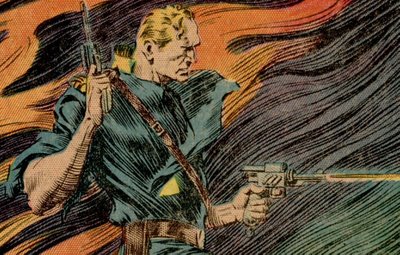
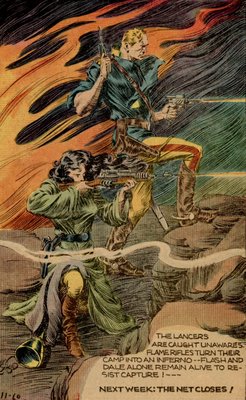
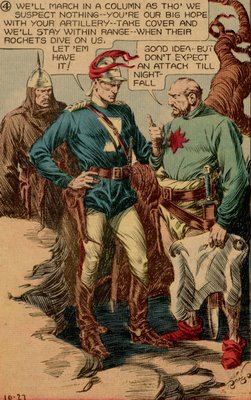
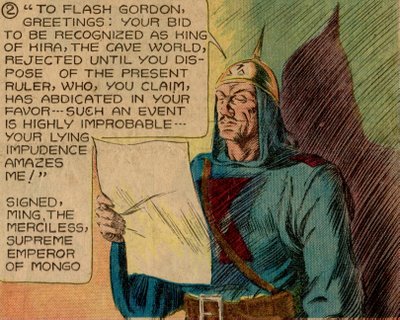
One of the most marvelous inventions to spring from the borders of trash and quality was Alex Raymond's comic strip, Flash Gordon. These virile drawings with their gorgeous lurid coloring are from a Sunday page in 1935.
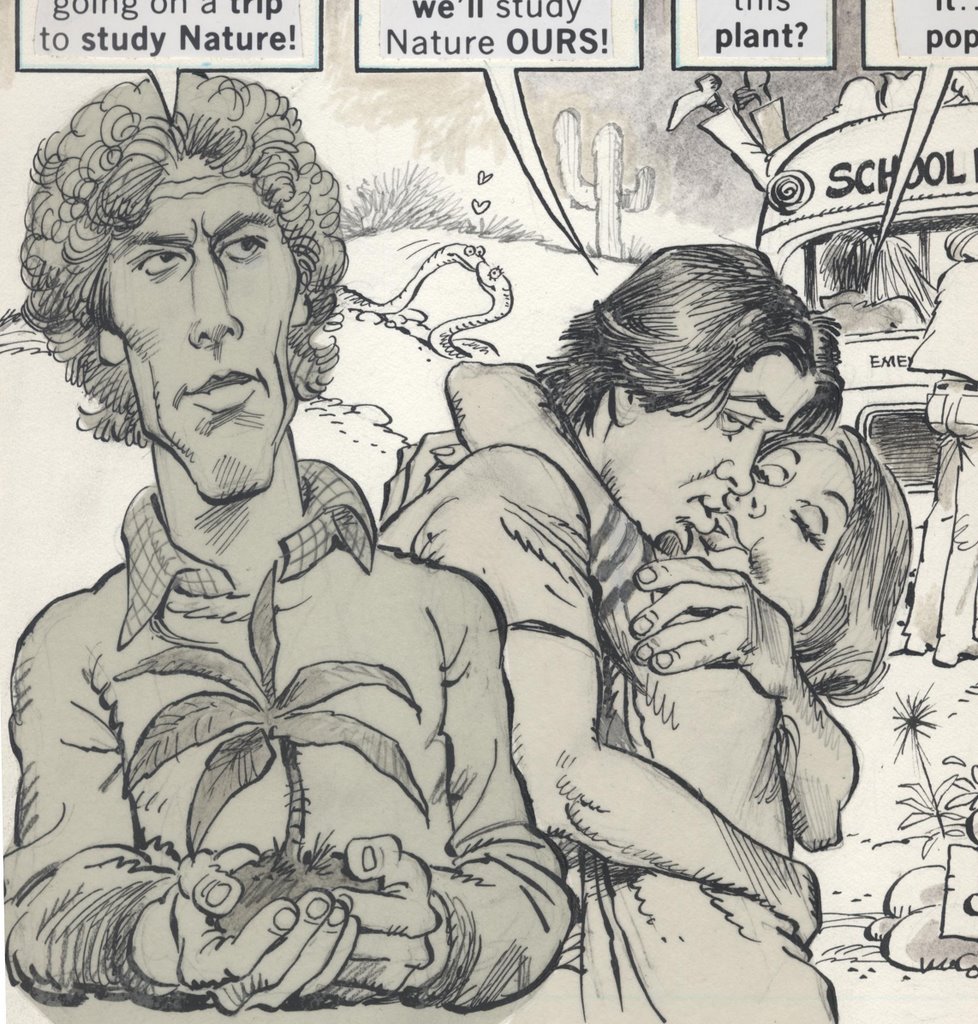
Unfortunately, vulgarity has few defenders left these days. The priests of high art have learned to tolerate many forms of marginal art but have never quite overcome their aversion to rocket ships and ray guns. Even illustrators who should know better often pull up the ladder behind them once they achieve some legitimacy. When Edward Sorel, a caricaturist of modest skill, had a show at the National Portrait Gallery he quickly changed uniforms. I asked his opinion of his fellow caricaturists at MAD magazine and he sniffed with derision, "those people are vulgar."
Once upon a time, vulgar (meaning uncouth and unrefined) art was not such a problem. The greatest works of western culture were filled with slapstick humor, violence and sex. Homer, Chaucer and Shakespeare are riddled with vulgarity. Chaucer, for example, loved flatulence jokes more than Howard Stern does. Here he writes about how a woman, after cheating on her husband with one lover, sticks her naked bottom out a window to trick a second suitor who is standing outside begging for a kiss in the night:Dark was the night as pitch, aye dark as coal
And through the window she put out her hole...
With his mouth he kissed her naked arse
Right greedily, before he knew of this.
Aback he leapt-- it seemed somehow amiss,
For well he knew a woman has no beard...
And said, "Oh fie, alas! What did I do?"
Compared to Chaucer, Flash Gordon seems positively refined. I don't recall Dale Arden resorting to anything so uncouth. Yet, pale critics weighed down by too much history and too much taste look at the excess in Flash Gordon and recoil.
Vulgar art flourishes even without defenders for the best of all possible reasons: because its strength commands an audience. It is robust art in a great cultural tradition. Some of the best ideas come from just outside the borders of good taste, wearing a little too much rouge, and we should not be so quick to take offense .





 Posts
Posts

