skip to main
|
skip to sidebar
###
 The illustrator Robert Fawcett used to complain about the grueling training in figure drawing that he received at the Slade school in London. He recalled bitterly how one professor made him devote a full week to drawing a single figure on plain paper using a hard graphite pencil. While it seemed like torture at the time, Fawcett admitted that by forcing him to focus on every nuance of the drawing, his professor weaned him from "the long, long search for shortcuts."
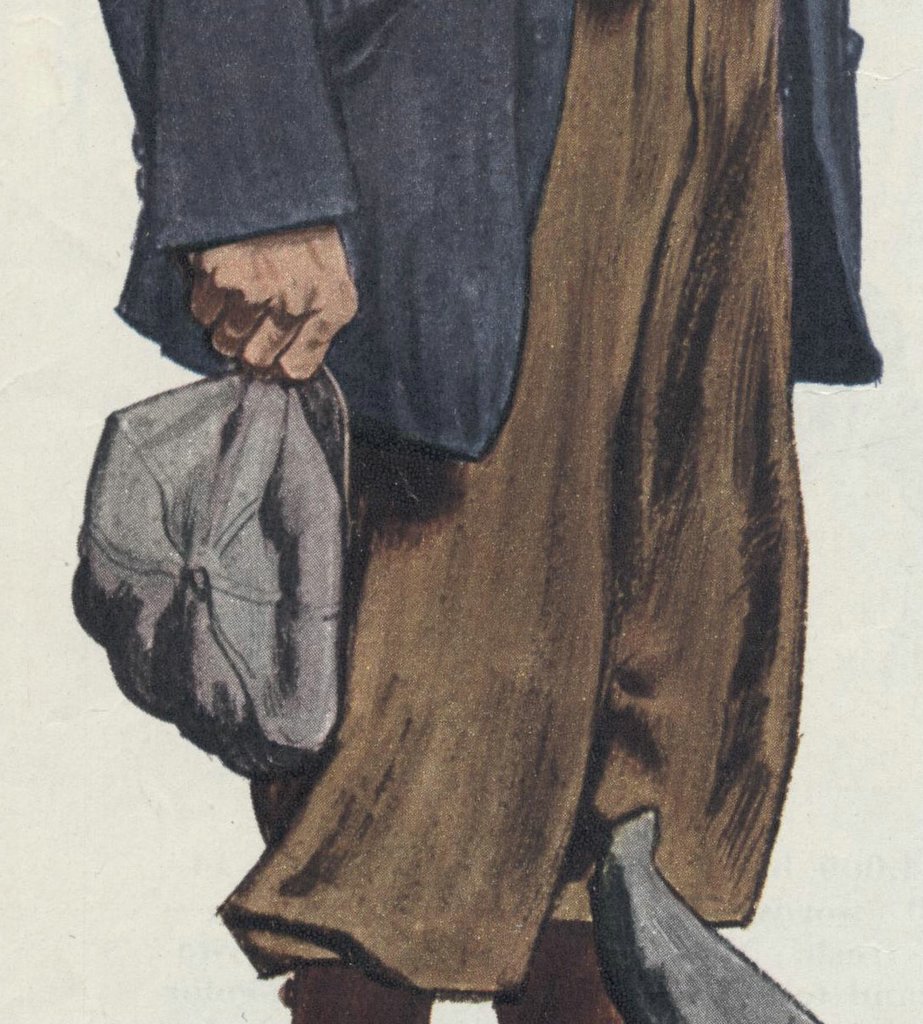
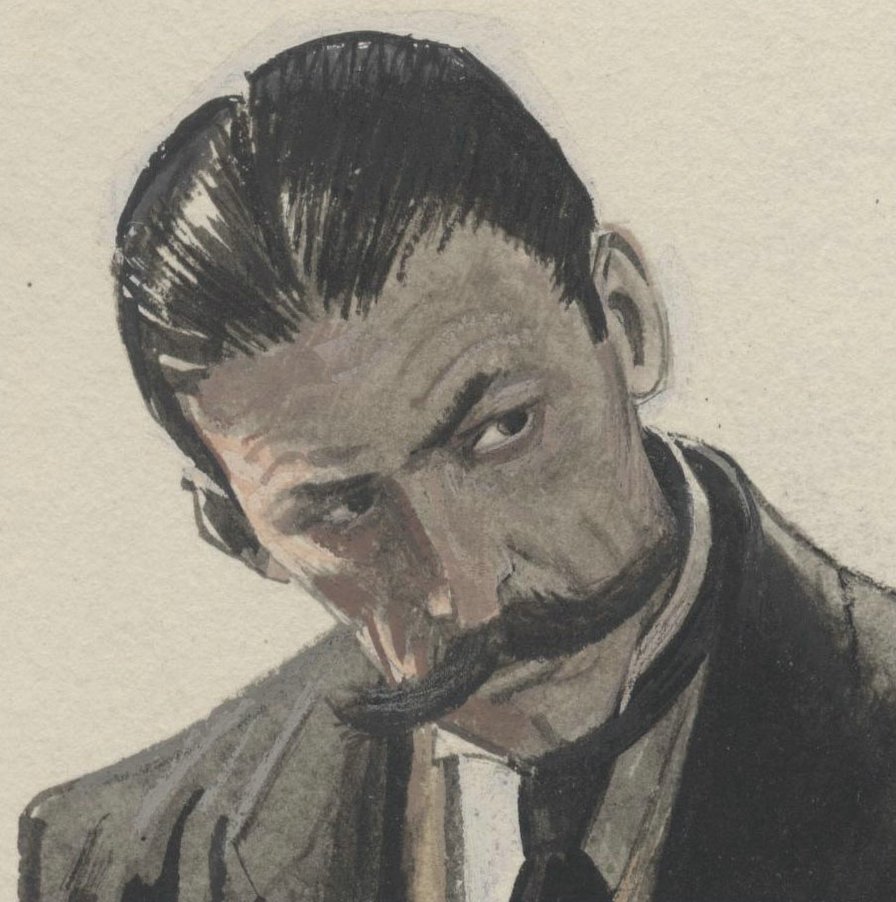
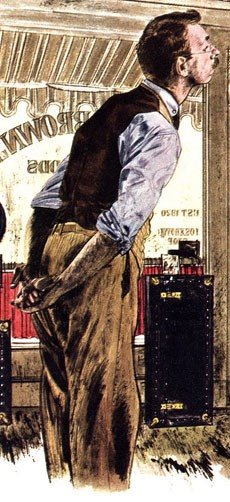
 This training shows up in many of Fawcett's illustrations, where he rarely resorted to the popular shortcuts in rendering the human figure. He did not assume that figures stood at a right angle to the ground, or that they were symmetrical.

 You rarely see straight lines for pants legs or ovals for heads. If you look at the shoulders, posture and body frames in these examples, you will see the work of an artist who kept his eyes open.


 The great philosopher Immanuel Kant once observed, "Out of the crooked timber of humanity, no straight thing was ever built." Fawcett seemed to appreciate that, and took great delight in illustrating the knot holes, wood grain and corrugated bark of his subjects.
###
###
 The Spiderman movies made $1.6 billion even before you start to count the international toy distribution licenses and TV rights. But if you strip away the investment bankers, lawyers, production companies and publicity agents, the whole mighty empire began with one lone artist sitting at his drawing board late at night inventing Spiderman while moths flickered around his fluorescent light.
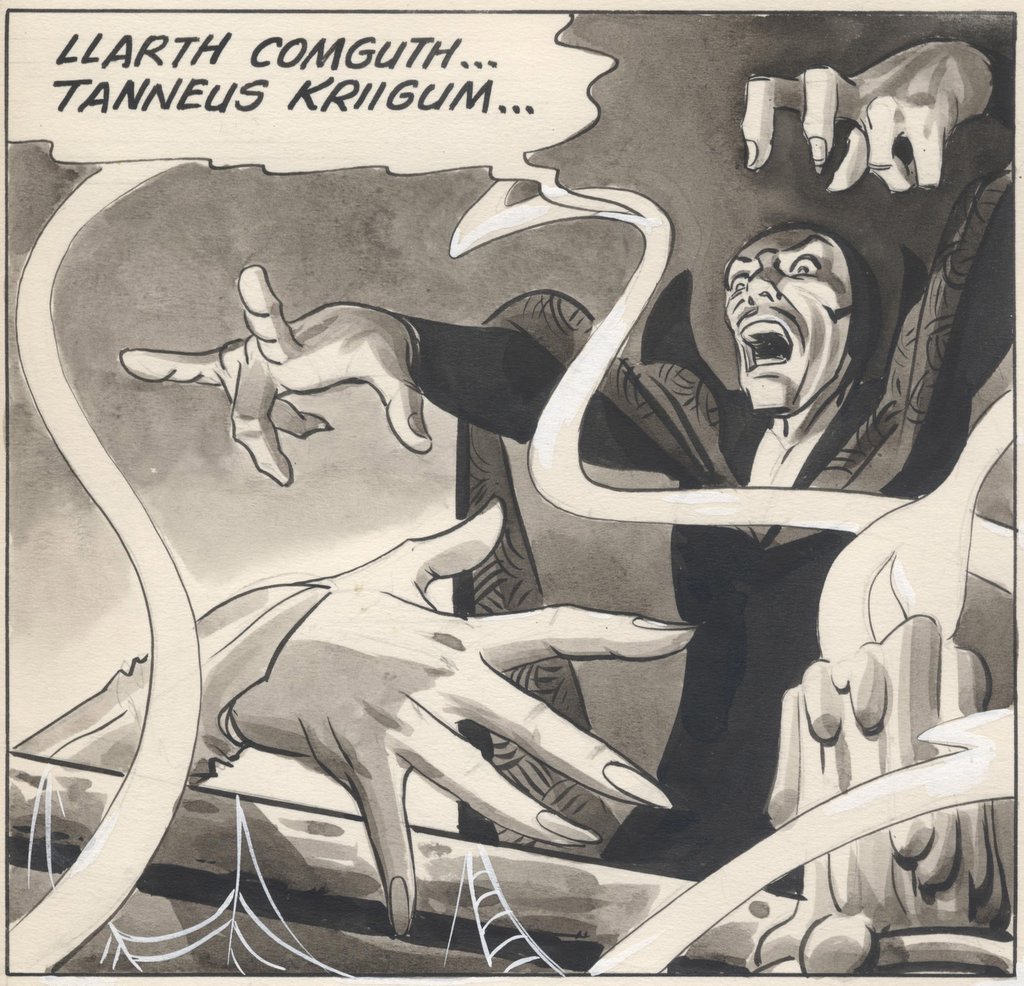
That artist was Steve Ditko. When you look at his drawings, such as the one above, you can appreciate how rich and evocative they were. Even when muted by crude printing on cheap paper, even without computer graphics, Dolby sound and flashing lights on IMAX screens, Ditko's creations were able to capture the imagination (and loyalty) of young boys. His battered drawing board is where it all started, the chain of events that went on to make hundreds of people fabulously wealthy (but not, of course, Steve Ditko).
This reminds me of the ancient Egyptian temple of Karnak.
 The Egyptians continued building and adding to the temple of Karnak for over 2,000 years. By 500 BCE, the temple grounds covered 200 acres of buildings, sacred lakes and grand courtyards. Karnak's "Sacred Enclosure of Amon" alone is 61 acres, big enough to hold ten European cathedrals.
But at the very heart of this sprawling compound is the Naos, the small primeval mound where ancient people first gathered in the wilderness to worship long before the engineers, builders and armies showed up. A handful of people found religious inspiration from that site, never dreaming that a mighty empire would arise on the spot where they stood. If you are impressed by the wealth and power of Karnak's vast concentric circles of courtyards and columns, it is good to remember that they all grew from a small sacred spot at the inner most core of the temple-- the "Holy of Holies."
The place where the original artist's brush touched the paper, that is the holy of holies.
###





 Posts

