skip to main
|
skip to sidebar
###
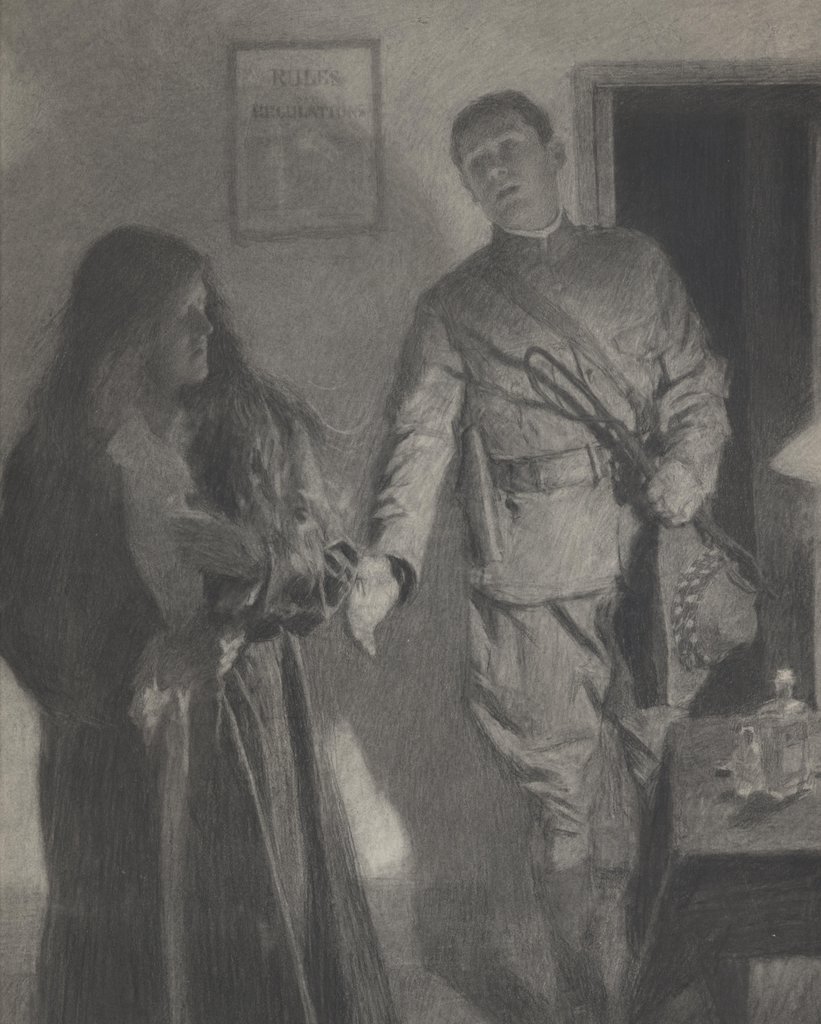
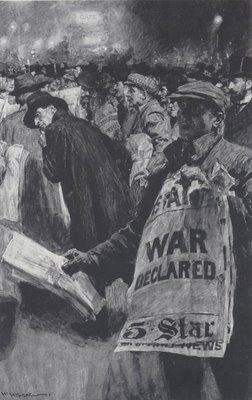 Paging through Victorian era magazines you will find thousands of dull, unimaginative illustrations that long ago ceased to have relevance to anyone. But every once in a while you find an illustration that leaps off the page, grabs you by the lapels and shakes you. The rare artist with "the spark" still stands out.
Most of his peers have been blissfully forgotten, but English illustrator William Hatherell (1855-1928) had "the spark" and deserves to be remembered for it.
This drawing overcomes every disadvantage that the world could throw in its way: working in black and white with charcoal and wash, reproduced in a publication with poor printing quality in a period when the prevailing style was largely fusty and stolid, Hatherell produced a picture of striking strength and vitality measured by the most modern standards.
His composition has all the verve and excitement of an illustration from America in the 1960s. His potent use of values, his vigorous strokes and the careful placement of figures result in a picture more dynamic and lively than much of what is produced today using the latest computer graphic technology. It just goes to show you that even if you are born in the wrong place and time, working with the wrong tools, sheer talent can do a lot to level the playing field.
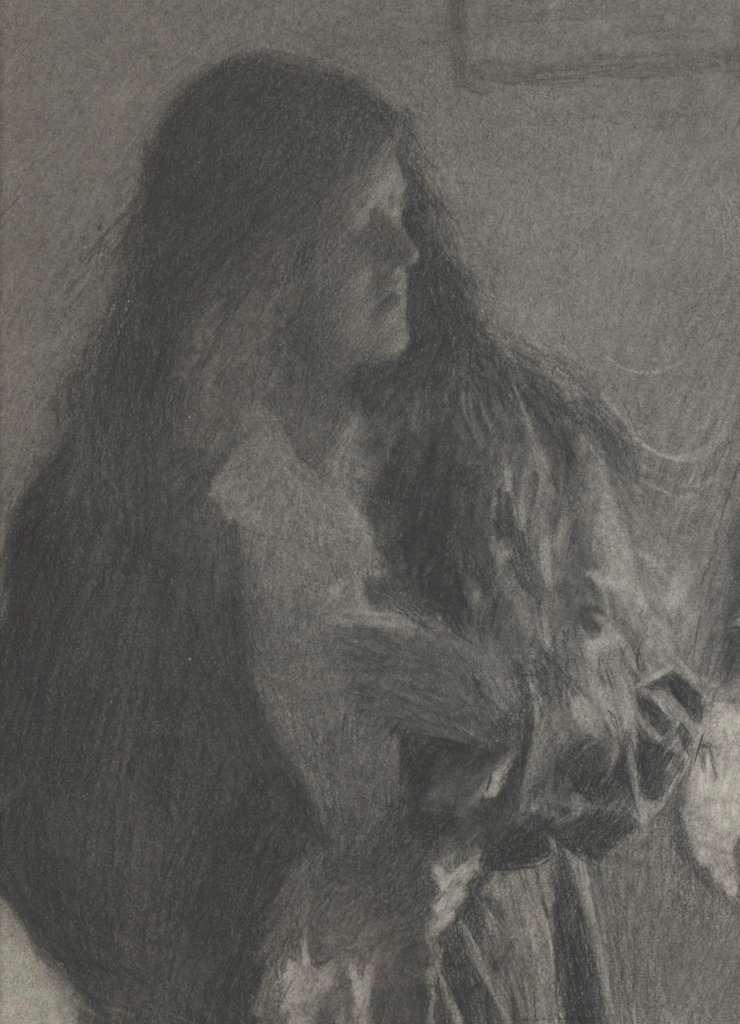
I don't have access to the original of this drawing by Hatherell, but I am attaching below some details from another one of his drawings so you can see his technique.
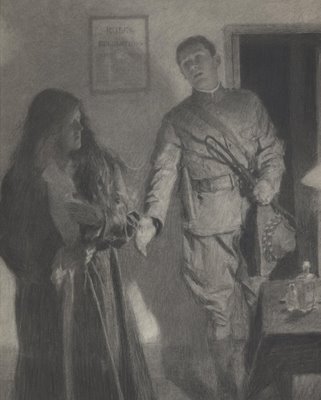 Hatherell worked on the staff of a magazine called The Graphic starting in the early 1890s.
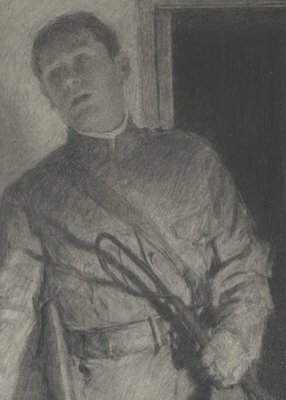 In less capable hands, this drawing would lapse into a nondescript puddle of gray. Only Hatherell's mastery of value maintains the integrity of the picture.
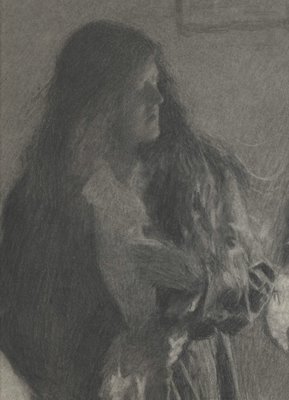 You won't find much of his work around these days, but this was a man who could draw.
###
You won't find much of his work around these days, but this was a man who could draw.
###
###
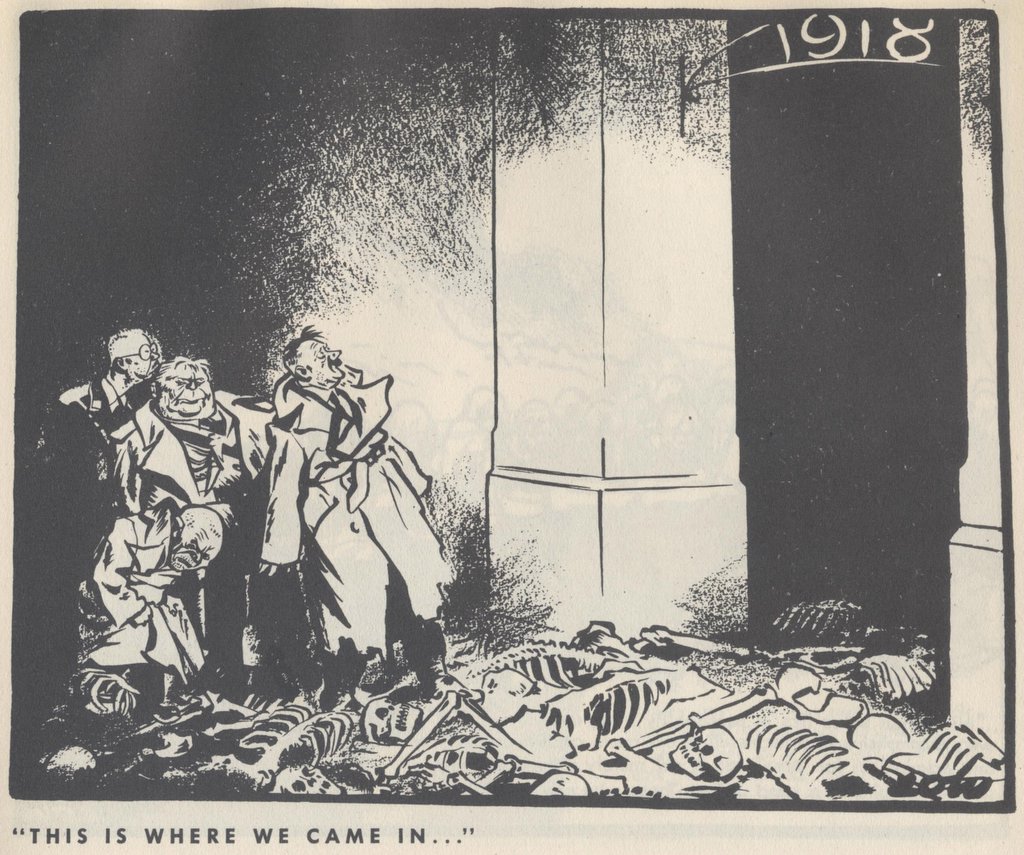
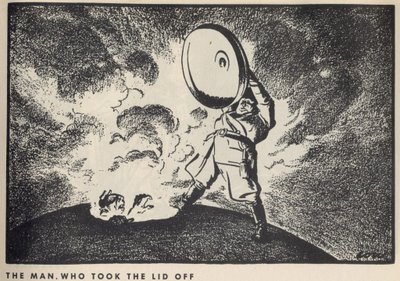 Perhaps the best political cartoonist to emerge from the smoking cauldron of World War II was David Low. The power of his simple, clear drawings took him halfway around the world and protected him from many forms of censorship.
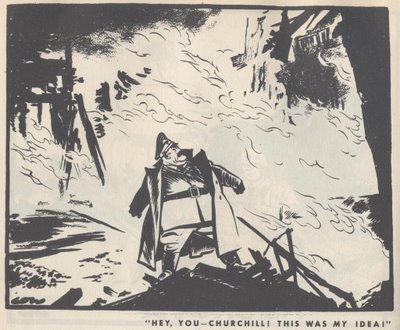 Low was born in a small town in New Zealand in 1891. He learned to draw from studying the pictures in old magazines in the back of a second hand bookshop. The popular style when Low was growing up was fancy, elaborate linework the way Charles Dana Gibson, Charles Keene and Norman Lindsay drew. Low wanted a simpler, cleaner look. His goal was to combine "quality with apparent facility."
 Low's direct, powerful style stood out from other editorial art of the day and brought him to the attention of local New Zealand publications, which then brought him offers of employment from Australia, and later from England where the richest and most powerful newspapers bid fiercely for his services. From this forum, Low waged a brilliant graphic assault on the Nazis.
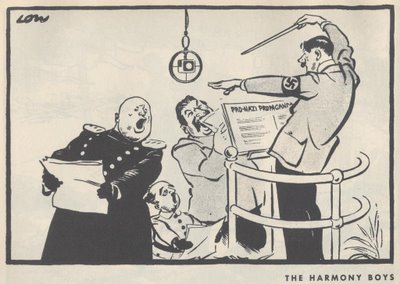
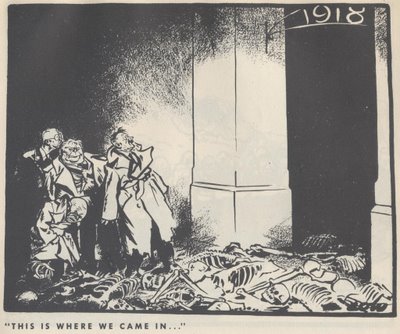
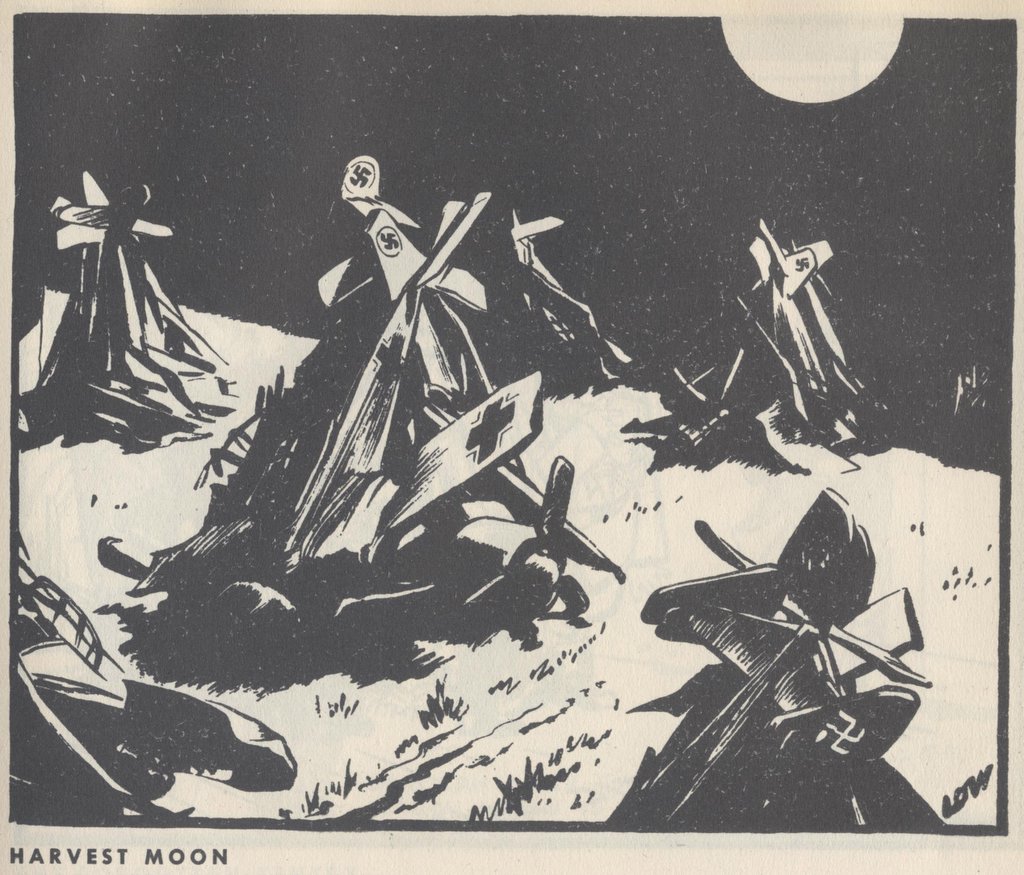
Low's art was not as simple as it looked. He later wrote, "making a cartoon occupied usually about three days: two spent in labour and one in removing the appearance of labour." You can see Low's hard work below the surface in the beautiful body language and facial expreessions of Stalin and Mussolini singing above, or in the salutations of Hitler and Stalin below. Note the tilt of the heads and the angles of the bodies. These are wonderfully choreographed drawings with simple, powerful darks and whites.
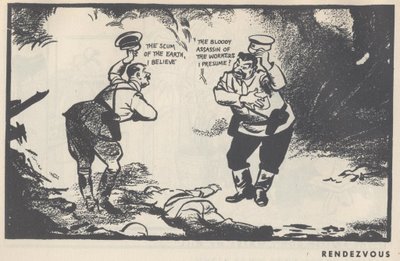 By studying the originals up close (see next image) you can see just how blunt and uncluttered Low's brushwork was. He worked large-- a typical cartoon would be 14 x 17.
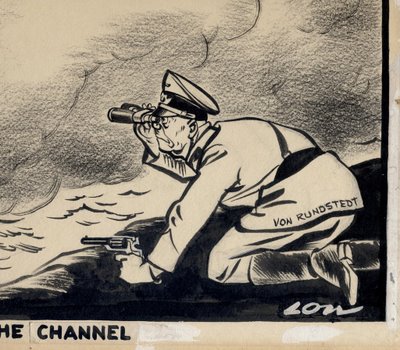 I love Low's no-frills drawing. Its honesty and toughness stood up to many a powerful enemy. Low was an ardent socialist but he was so good that the staunchly conservative Lord Beaverbrook begged Low to come work for Beaverbrook's newspaper, The Evening Standard. Beaverbrook promised to double Low's salary and give him complete artistic freedom. Beaverbook later grumbled that Low was trying to comandeer the whole paper's editorial policy, but he never dared to censor Low's voice.
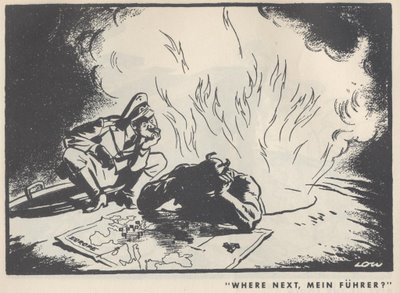 Hitler was enraged by Low's scathing drawings, and the Nazi government formally requested that the British government "bring influence to bear" to stop Low. However, nothing was done. After World War II, objections came from the opposite side of the fence: Winston Churchill claimed that a cartoon about the situation in Greece should be blocked "in the interests of western democracy."
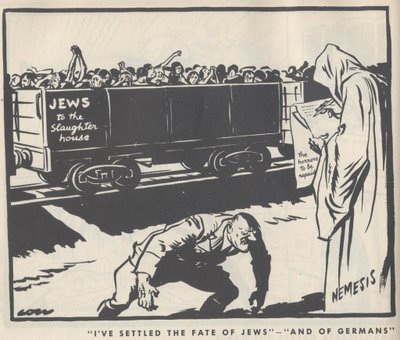
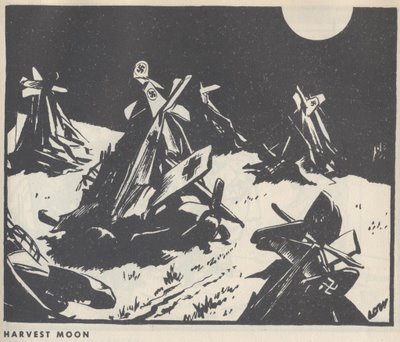 Once upon a time, the ability to draw with strong, clear lines and a sharp eye could take you from a small town in New Zealand to the center of the world stage in London where powerful publishers and world leaders would rail against you, to no avail. Low was ultimately protected by the beauty and directness of his work.
 ###
###






 Posts
Posts

